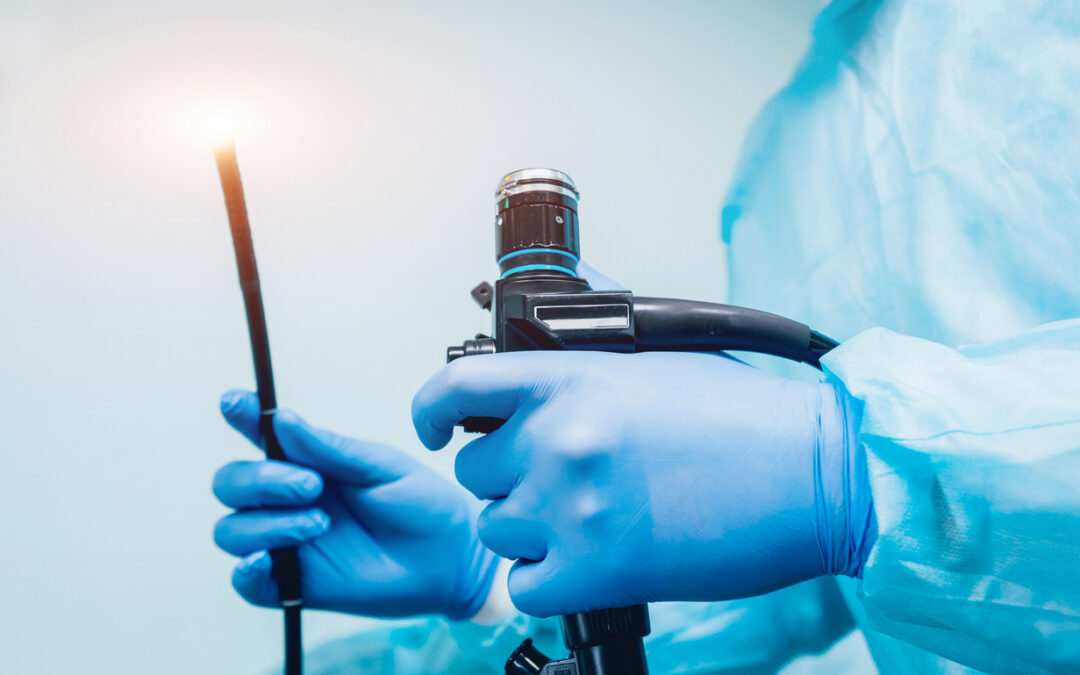
Olympus recalled thousands of TJF-Q190V duodenoscopes due to a risk of infections and persistent contamination after the reusable scopes were disinfected between patients.
What You Can Do & How We Can Help
The Schmidt Firm, PLLC is currently accepting duodenoscope infection cases in all 50 states. If you or a loved one was diagnosed with a severe infection, superbug, sepsis, organ damage, or other complication after undergoing an ERCP or other Olympus scope procedure, you should contact our lawyers immediately for a free case consultation. Please use the form below to contact our Defective Medical Device Litigation Group or call toll free 24 hours a day at (866) 920-0753.
Olympus Duodenoscopes Recalled After Continued Reports of Infections
In October 2025, Olympus recalled 7,023 TJF-Q190V duodenoscopes due to a risk of persistent contamination and infections. Olympus sent an Urgent Medical DEvice Correction Letter to inform health care facilities about the Class II recall.
According to Olympus:
“Continued reports of positive cultures and infections have identified updates to the reprocessing materials to minimize potential deviations in TJF duodenoscope reprocessing.”
What is the Problem?
Olympus duodenoscopes are a type of medical scope that are designed to be reused between patients. A critical step is reprocessing, which is a multi-step cleaning protocol that health care facilities must strictly follow to ensure the scope is clean before it can be reused on another patient. If the scope is not clean, it can carry biological material from one patient to the next (or potentially many patients). This poses a risk of severe infections.
Why Is It So Hard to Clean?
A duodenoscope is a medical device that looks like a flexible tube with a light and a camera on the end. It is inserted into a patient’s mouth and down their throat, stomach, and into the small intestine. Duodenoscopes are used in a procedure called an ERCP, which is used to diagnose and treat conditions affecting the bile ducts and pancreas. According to the FDA, duodenoscopes are used in at least 500,000 ERCP procedures in the U.S. every year.
Modern duodenoscopes have a complex design, with a hinged component at the tip called an elevator mechanism. The scopes also have narrow channels, seams, and crevices that can potentially harbor bacteria and biological matieral.
If these nooks and crannies on a duodenoscope are not adequately disinfected, there is a risk that tissue or fluid from one patient can be transmitted on the scope to the next patient.
The problem is that infections have been reported in patients who underwent ERCP procedures, even after healthcare staff exactly followed the cleaning instructions for the duodenoscope. In recent years, lawsuits have been filed against Olympus and other manufacturers by patients who claim that the reprocessing instructions are inadequate to ensure the scope is always sterile.
How Many People Got Sick?
In an Urgent Medical Device Correction notice published in October 2025, Olympus reported that from 2024 through October 2025 the company received 2 reports of deaths and 5 reports of serious injury from infections or positive cultures that were potentially related to use of the now-reaclled TJF-Q190V duodenoscope.
However, Olympus cautioned that those reports did not contain enough information to determine if the duodenoscope actually contributed to transmission of an infection.
Those reports do not include an earlier outbreak of infections. For example, from January 2013 through December 2014, the FDA received 75 multi-drug resistance alerts involving approximately 135 patients in the U.S. related to possible microbial transmission from reprocessed duodenoscopes.
What is the Risk of Infection?
Duodenoscopes that are contaminated with biological material from previous patients is a serious health risk. When a scope remains contaminated after reprocessing, it may due to a drug-resistant pathogen that is difficult to treat when it infects a new patient.
There risk of serious infections includes (but is not limited to):
- Carbapenem-resistant Enterobacterales (CRE), often called a “superbug”
- Vancomycin-resistant Enterococcus (VRE)
- Pseudomonas aeruginosa
- Escherichia coli (E. coli)
- Clostridioides difficile (C. diff)
- Bacteremia and other bloodstream infections
- Sepsis and septic shock
- Pneumonia and severe pulmonary infection
- Organ failure
These infections may not cause symptoms for days or weeks after an ERCP procedure. The delay is one reason why patients and families sometimes fail to realize their sudden hospitalization was the result of a routine scope procedure they had weeks earlier.
Why Did Olympus Pay $85 Million to the Justice Department?
In December 2018, Olympus Medical Systems Corp. and a former senior executive pleaded guilty in federal court to 3 counts of distributing misbranded medical devices. The Justice Department ordered the company to pay an $80 million fine, plus $5 million in criminal forfeiture.
According to the DOJ, Olympus failed to file mandatory FDA adverse event reports in 2012 and 2013 related to infections in Europe from its TJF-Q180V duodenoscope, and continued selling the scopes in the U.S. despite the infections. The outbreak in Europe included 22 patients who were infected with Pseudomonas aeruginosa at a medical center in the Netherlands and 3 patients who were infected with E. coli at a clinic in France.
Olympus Duodenoscopes and Components
- Olympus TJF-Q190V, EVIS EXERA III Duodenovideoscope, subject of the open October 2025 recall
- Olympus TJF-Q290V and TJF-Q170V, named alongside the Q190V in the October 2025 field safety notice
- Olympus TJF-Q180V, the earlier generation tied to the 2015 outbreaks and the 2018 guilty plea
- Olympus MAJ-2315 single use distal cover, 988,700 units, recall Z-2676-2026, FDA determined cause listed as device design
- Fujifilm and Pentax duodenoscope models subject to FDA warning letters and postmarket surveillance orders
Are Duodenoscope Infection Lawsuits Being Filed?
Yes. Patients and families have filed individual lawsuits in state and federal courts after they developed infections and other serious complications.
In June 2026, a wrongful death lawsuit was filed by the widow of a man who developed a vancomycin-resistant Enterococcus infection after he underwent an ERCP procedure with an Olympus TJF-Q190V duodenoscope. He died less than 3 weeks later of septic shock and organ failure.
What Do Lawsuits Claim?
Lawsuits involving infections from Olympus duodenoscopes generally claim that the scopes are defectively designed because they cannot be reliably cleaned, even when healthcare staff follow the manufacturer’s instructions for reprocessing.
Duodenoscope Infection Lawsuits: Who May Qualify?
Our lawyers are evaluating claims for people who had any of the following scope procedures from 2018 to now:
- ERCP
- Colonoscopy
- Upper Endoscopy
- Bronchoscopy
- Laparoscopy
- Cystoscopy
- Ureteroscopy
- Hysteroscopy
- Sinus Endoscopy
The procedure must have resulted in a serious injury, for example:
- Diagnosis of a “superbug” or drug-resistant infection such as CRE or E. coli within 180 days of the procedure
- Organ or tissue damage, or perforation
- Dislodging or breaking of the endoscopic device
- Severe bleeding or hemorrhaging that required hospitalization or a blood transfusion
- Sepsis or bacteremia (blood infection)
- Bacterial infection requiring hospitalization
- Pneumonia or severe pulmonary infection
- Tuberculosis within 90 days of the procedure
- HIV diagnosis within 90 days of the procedure
- Death from an infection, a “superbug,” or a component failure
Do I Have a Duodenoscope Lawsuit?
The Schmidt Firm, PLLC is currently accepting duodenoscope infection cases in all 50 states. If you or a loved one was diagnosed with a severe infection, superbug, sepsis, organ damage, or other complication after undergoing an ERCP or other Olympus scope procedure, you should contact our lawyers immediately for a free case consultation. Please use the form below to contact our Defective Medical Device Litigation Group or call toll free 24 hours a day at (866) 920-0753.
Attention Lawyers: We consider a referral from another law firm to be one of the greatest compliments. If your firm is interested in referring us a case or for us to send you a list of previous award judgments and/or average referral fees, please visit the Lawyer Referral section of our website.
 The Schmidt Firm, PLLC has been recognized as one of the nation’s leading plaintiffs' law firms and handles cases in all 50 states. We are very proud of our legal achievements, but equally self-respecting of our firm's reputation for providing personal attention to each and every client we represent.