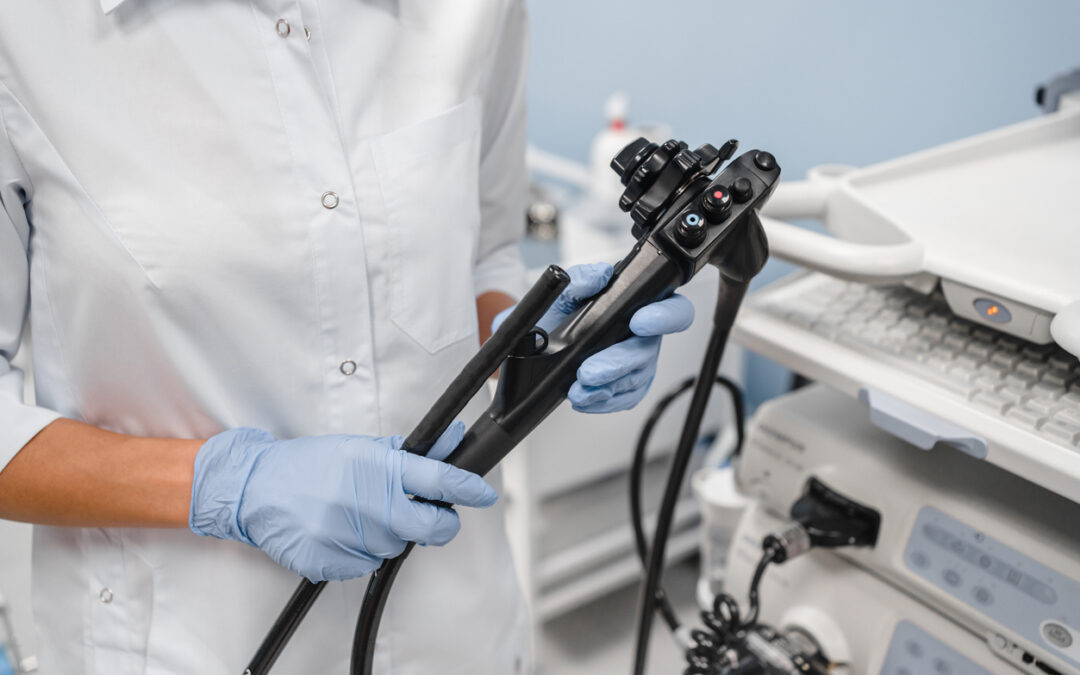
Olympus voluntarily recalled 7,023 TJF-Q190V duodenoscopes in October 2025 after continued reports of positive cultures and infections. Lawsuits filed in 2026 claim its reusable endoscopes cannot be reliably cleaned between patients.
What You Can Do & How We Can Help
The Schmidt Firm, PLLC is currently accepting endoscope infection cases in all 50 states. If you or a loved one developed sepsis, a drug-resistant superbug, pneumonia, or another serious infection after an endoscopy, colonoscopy, ERCP, bronchoscopy, or cystoscopy performed with a reusable scope, you should contact our lawyers immediately for a free case consultation. Please use the form below to contact our Defective Medical Device Litigation Group or call toll free 24 hours a day at (866) 920-0753.
Quick Facts About Endoscope Infections
- Manufacturer named in lawsuits: Olympus Corporation, Olympus America Inc., Olympus Medical Systems Corp., and related companies
- Devices involved: Reusable endoscopes, including duodenoscopes, colonoscopes, bronchoscopes, cystoscopes, and ureteroscopes
- Most recent recall: Olympus TJF-Q190V duodenoscope, initiated October 14, 2025 (FDA recall number Z-0579-2026)
- Units affected: 7,023 duodenoscopes distributed nationwide
- Hazard: Olympus cited continued reports of positive cultures and infections and updated its instructions for cleaning the scope between patients
- Infections linked to contaminated scopes: CRE, VRE, Pseudomonas, E. coli, C. diff, Mycobacterium, and sepsis
- Lawsuit status: Individual product liability and wrongful death lawsuits filed in federal courts in 2026
- Official source: FDA recall notice Z-0579-2026
What Is an Endoscope Infection?
An endoscope infection is a bacterial infection that develops after a medical procedure is performed with a reusable scope that is still contaminated with biological material after it has been used on a patient and reprocessed.
Endoscopes are long, flexible tubes with a light and camera at the tip. Hospitals use these scopes in millions of procedures per year, and many scopes are reusable devices that are meant to be cleaned, sanitized, and reused on another patient.
If tissue, fluid, bacteria, biological material, viruses, or pathogens survive the cleaning process, infections can be transmitted from one patient to the next patient. The problem is also very seirous because these scopes are often used on patients with underlying health issues, such as cancer, who may not be able to fight off an infection as easily as a healthy patient.
Why Are Reusable Endoscopes So Hard to Clean?
Endoscopes go through a multi-step cleaning process called reprocessing before they are reused on another patient. This process includes pre-cleaning, leak testing, manual cleaning/scrubbing, high-level disinfection or sterilization, rinsing, and drying.
The problem is that these scopes are highly complex devices, with long internal channels, moving parts, seals, cameras, and crevices where biological material can hide from brushes and disinfectants.
When Reprocessing Instructions Fail to Sterilize a Scope
Hospitals sometimes fail to follow reprocessing instructions, but the blame in some cases may be the instructions themselves. For example, in 2013, contaminated duodenoscopes were linke to a cluster of patients who were infected with multi-drug-resistant bacteria.
When the FDA investigated, they confirmed that hospitals were following the reprocessing instructions, but the scopes remained contaminated with biological material. This was a “confirmation that the users were following proper manufacturer cleaning and disinfection or sterilization instructions,” according to the FDA.
Which Types of Endoscopes Have Been Linked to Infections?
The FDA has received reports of infections and contamination involving several kinds of reusable scopes. Each type is used in a different part of the body, and each has its own history of recalls, warnings, and lawsuits.
Duodenoscopes Linked to ERCP Infections
In October 2025, Olympus announced a voluntary recall for about 7,023 TJF-Q190V duodenoscopes due to a possible risk of patient infections. Olympus told hospitals it had received reports of continued positive cultures on reprocessed scopes. There were also 2 patient deaths and 5 serious injuries reported, but Olympus said those reports did not have enough information to determine if a dirty scope actually caused the infection.
Instead of removing the scopes from hospitals or redesigning them, Olympus sent out new instructions for reprocessing the scopes, and urged hospitals to train employees on how to carefully follow the updated procedure. More details can be found on our duodenoscope infection lawsuit page.
Have Colonoscopy Scopes Been Linked to Infections?
In September 2023, Olympus recalled 3,101 PCF-series colonoscopes after finding that some scopes that had been repaired at its own facility were not fully dry before they were returned to hospitals. If the scopes have water in their channels, it could create a risk of contamination and patient infections.
In July 2026, a colonoscopy scope infection lawsuit was filed by a woman who developed a C. diff infection after an Olympus CF-HQ190L colonoscope was used in her colonoscopy in 2024. She was hospitalized for 10 days. Her lawsuit was filed in the U.S. District Court for the Northern District of Illinois (Case No. 1:26-cv-08098).
What Lung Infections Have Been Linked to Bronchoscopes?
A bronchoscope is passed through the nose or mouth to examine the airways and lungs. In a June 2021 safety communication, the FDA said it received 867 reports of infection or device contamination involving reusable flexible bronchoscopes between July 2015 and January 2021. For more information, see our Olympus bronchoscope infection lawsuit page.
Are Cystoscopes Linked to Urinary Tract Infections?
Yes. Anyone who developed a urinary tract infection or sepsis after a bladder scope can find more information on our cystoscopy infection lawsuit page.
What Infections Have Been Linked to Contaminated Endoscopes?
The FDA alert on the MAJ-891 plug warned that exposure to a contaminated scope could lead to infection, urinary tract infection, or sepsis, and in some cases death. Patients who develop an infection or may require hospitalization and oral or IV antibiotics.
There are many types of infections that could potentially occur from a contaminated scope. Some examples include:
- Carbapenem-resistant Enterobacterales (CRE), a drug-resistant superbug
- Vancomycin-resistant Enterococcus (VRE)
- Pseudomonas aeruginosa
- Escherichia coli (E. coli)
- Clostridioides difficile (C. diff)
- Klebsiella and Serratia
- Mycobacterium infections, including tuberculosis
- Urinary tract infections
- Bacteremia (bloodstream infection), sepsis, and septic shock
- Pneumonia and severe lung infections
How Soon After an Endoscopy Can an Infection Show Up?
An infection linked to a contaminated scope does not always appear right away. Because the infection may not be diagnosed for weeks, many families never connect it to a routine scope procedure. Our lawyers review drug-resistant infections diagnosed within 180 days of a procedure, and tuberculosis or HIV diagnosed within 90 days, and other types of infections.
Who May Qualify for an Endoscope Infection Lawsuit?
You may qualify if you or a loved one had one of the following procedures from 2018 to the present:
- Colonoscopy
- Upper endoscopy
- ERCP (duodenoscope)
- Bronchoscopy
- Cystoscopy
- Ureteroscopy
- Hysteroscopy
- Laparoscopy
- Sinus endoscopy
The procedure must also have been followed by at least one serious injury, such as:
- Diagnosis of a superbug or drug-resistant infection such as CRE or E. coli within 180 days of the procedure
- Organ or tissue damage, or perforation
- Dislodging or breaking of the endoscopic device
- Severe bleeding or hemorrhaging that required hospitalization or a blood transfusion
- Sepsis or bacteremia (blood infection)
- Bacterial infection requiring hospitalization
- Pneumonia or severe pulmonary infection
- Tuberculosis within 90 days of the procedure
- HIV diagnosis within 90 days of the procedure
- Death from an infection, a superbug, or a component failure
Do I Have an Endoscope Infection Lawsuit?
The Schmidt Firm, PLLC is currently accepting endoscope infection cases in all 50 states. If you or a loved one developed sepsis, a drug-resistant superbug, pneumonia, or another serious infection after an endoscopy, colonoscopy, ERCP, bronchoscopy, or cystoscopy performed with a reusable scope, you should contact our lawyers immediately for a free case consultation. Please use the form below to contact our Defective Medical Device Litigation Group or call toll free 24 hours a day at (866) 920-0753.
Attention Lawyers: We consider a referral from another law firm to be one of the greatest compliments. If your firm is interested in referring us a case or for us to send you a list of previous award judgments and/or average referral fees, please visit the Lawyer Referral section of our website.
 The Schmidt Firm, PLLC has been recognized as one of the nation’s leading plaintiffs' law firms and handles cases in all 50 states. We are very proud of our legal achievements, but equally self-respecting of our firm's reputation for providing personal attention to each and every client we represent.