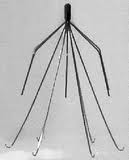
C.R. Bard, Cook Medical, and other companies sell IVC filters that catch blood clots. Temporary filters that are not removed can fracture, migrate, perforate internal organs, and cause deadly side effects.
What You Can Do & How We Can Help
The Schmidt Firm, PLLC is currently evaluating IVC filter cases in all 50 states, regardless of whether you have been injured or not. If you or somebody you know was implanted with an IVC filter, you should contact our lawyers immediately for a free case consultation. Please use the form below to contact our Defective Medical Device Litigation Group or call toll free 24 hours a day at (866) 920-0753.
Jury Awards $3.3 Million to Woman Injured by IVC Filter
In June 2021, a jury in Wisconsin awarded $3.3 million to Natalie J., a woman who was seriously injured when her Bard Meridian® IVC Filter broke into pieces, became embedded in her vein. She needed multiple surgeries to remove the filter and a broken piece that traveled to her heart, according to the lawsuit.
Texas Jury Awards $2.5 Million in IVC Filter Lawsuit
In June 2021, a jury in Dallas, Texas, awarded $2.5 million to a woman who was injured by an IVC Filter manufactured by C.R. Bard. In 2018, she developed blood clots in her lungs, and doctors discovered that her IVC filter had broken into pieces that traveled to her heart and lungs.
Jury Awards $926,000 in Bard IVC Filter Lawsuit
In May 2021, a jury in Oregon awarded $926,000 to a man who filed a lawsuit after his Bard Eclipse IVC Filter punctured his vein and intestines, causing major internal bleeding that required emergency surgery. Click here to read more.
Court Upholds $3.6 Million IVC Filter Jury Award
In August 2020, federal judges upheld a $3.6 million award to a woman who was injured by a Bard IVC Filter that broke, requiring her to undergo open-heart surgery. Click here to read more.
$3 Million Awarded in Cook IVC Filter Trial
February 2019 — A woman who was injured by a defective Celect® IVC Filter manufactured by Cook Medical has been awarded $3 million in compensation by a jury in Indiana. Click here to read more.
$3.6 Million Awarded in Bard IVC Filter Trial
April 2018 — C.R. Bard has been ordered to pay $3.6 million to a woman who needed open-heart surgery when her IVC Filter tilted, migrated, fractured, and broken pieces punctured through her veins and traveled to her heart. Click here to read more.
Over 7,000 IVC Filter Lawsuits Filed Nationwide
There are now over 7,00 IVC Filter lawsuits pending against C.R. Bard and Cook Medical in two federal courts in Arizona and Illinois. Hundreds of additional lawsuits are also pending against B. Braun, Rex Medical, Argon Medical, and other manufacturers.
NBC News Investigation Questions Safety of IVC Filters
An investigation by NBC News reviewed internal documents showing that C.R. Bard was concerned about the safety of the G2 filter within 4 months of its approval, but continued to sell 160,000 of the devices over the next 5 years.
In 2015, another investigation with NBC News questioned the safety and possibly forged approval of C.R. Bard’s Recovery IVC filter. In the last decade, 27 deaths and 300 non-fatal adverse events have been linked to the device.
The G2 has been linked to at least 12 deaths and hundreds of adverse events, suggesting it may have similar problems as the Recovery filter.
What is an IVC Filter?
An IVC filter (also known as a vena cava filter or blood clot filter) is a device that catches blood clots before they enter the lungs and cause a pulmonary embolism. It is implanted in the inferior vena cava (IVC), which is a vein that carries “blue” blood from the body to the lungs to receive oxygen. IVC filters are mostly implanted in patients who can’t use blood-thinning drugs.
C.R. Bard IVC Filters
- Recovery IVC Filter (withdrawn in 2005)
- G2 IVC Filter
- G2 Express / G2X Filter
- Eclipse
- Meridian
- Denali
Cook IVC Filters
Other Retrievable IVC Filters
FDA Safety Warning
In August 2010, the FDA issued a Safety Communication after receiving nearly 1,000 reports of IVC filter injuries since 2005, often due to temporary filters that were not removed. In 2014, the FDA updated this warning to recommend removing the filters within 29-54 days, if possible.
Stronger Safety Warnings in Other Countries
Other safety warnings have been issued by Health Canada and the Australian Therapeutic Goods Administration (TGA). These agencies have asked hospitals to identify patients who have received IVC filter sand develop formal follow-up plans to remove the filter. Canada also says the filters should only be implanted in patients who cannot take blood-thinning medications, and only if they have also been diagnosed with blood clots in their legs or lungs.
Can an IVC Filter Move?
Yes. Blood clot filters can move, migrate, tilt, out of position, and get stuck where it is not supposed to be. This could cause it to become ineffective to protect against blood clots. It is often impossible to remove. In rare cases, the entire filter moves to the heart and causes sudden death.
IVC Filter Migration Symptoms
IVC filter migration symptoms include chest pain, low blood pressure (hypotension), irregular heart rhythm (arrhythmias), neck pain, confusion, feeling light-headed, nausea, shortness of breath, fainting, or loss of consciousness.
Vena Cava Perforation
The inferior vena cava is the largest vein in the body, but its walls are very thin. The sharp needle-like legs of an IVC filter can perforate the vena cava and cause internal bleeding. The filter may also be impossible to remove when it is stuck in the blood vessel.
IVC Filter Fracture & Embolization
Temporary vena cava filters were never studied for permanent implantation. When they fracture, the needle-like wire legs break off and travel in the bloodstream (called “embolization”) until they get stuck in the heart, lungs, or other blood vessels. This can cause severe organ damage. For example, doctors at Baylor University published a case report of a young woman who experienced severe complications when a Bard G2 IVC filter fractured after it was was left in her body for more than 6 years.
IVC Filter Thrombosis
Blood clot filters are designed to catch blood clots. In some cases, the filter becomes clogged. This can block blood-flow between the lower half of the body and the heart. Over time, circulation problems significantly increase the risk of Deep Vein Thrombosis (DTV). Long-term complications include chronic pain, swelling, ulcers, and circulation problems in the legs.
IVC Filter Removal Surgery
All temporary IVC filters should be removed. However, when complications occur, it is not always possible to remove the filter with minimally-invasive surgery. Patients may need invasive open-heart surgery. However, most of the time surgeons will leave a broken filter embedded in the patient because surgery to remove it is more risky than leaving it implanted.
IVC Filter Deaths Classified as “Malfunctions”
In July 2015, the FDA sent a warning to C.R. Bard after finding that the company was mistakenly classifying serious injuries and deaths as “device malfunctions.” In one report, a G2 filter broke and the detached filter arm caused severe bleeding, lung damage, and death.
When Should an IVC Filter Be Removed?
The longer an IVC filter remains implanted, the higher the risk of complications. The FDA recommends removing the filters within 29-54 days after implantation, or as soon as the patient can take a blood-thinning medication. Even so, studies indicate that less than 30% of IVC filters are ever removed. Fewer than 10% are removed from trauma patients.
C.R. Bard MDL
As of December 2016, over 1,100 IVC filter lawsuits against C.R. Bard were centralized into a Multi-District Litigation (MDL No. 2641) in the U.S. District Court for Arizona under U.S. District Judge David G. Campbell.
C.R. Bard IVC Filter Class Action
In addition to personal injury cases, the MDL also includes a class action for everyone who was implanted but not injured by a blood clot filter made by C.R. Bard. Lawyers are seeking compensation for everyone who needed follow-up medical care due to the high risk of side effects.
Cook Medical MDL
As of December 2016, nearly 1,200 IVC filter injury lawsuits against Cook Medica were centralized into one federal court in the Southern District of Indiana under Judge Richard L. Young (MDL No. 2570) in 2014.
IVC Filter Trials
In 2012, a state-court jury in Arizona cleared C.R. Bard of wrongdoing in the first IVC filter trial. The next IVC filter trial is scheduled for 2017, and will involve the Celect IVC filter made by Cook Medical. The second trial will involve the Günther Tulip IVC filter, also made by Cook Medical.
IVC Filter Settlement Amount
In February 2015, C.R. Bard reached a settlement with a man who underwent emergency surgery to remove a Recovery filter. The amount of the settlement was not disclosed publicly. Our lawyers are pursuing lawsuit settlements and cash payouts for people who were injured by IVC filters.
IVC Filter Lawsuits
Over 2,000 lawsuits have been filed by people who were injured by blood clot filters. Many cases involve severe complications like open-heart surgery and wrongful death. Some victims still have broken pieces of the filter in their body because they were too dangerous to remove.
IVC Filter Lawsuit Statute of Limitations
The statute of limitations for an IVC filter lawsuit depends on the state where you live. In some states, this time-limit is 1 year from the date of your injury. In other states, it is up to 6 years. The deadline can be much longer if a manufacturer concealed side effects, so it is always a good idea to talk to a lawyer if you think you might have a lawsuit.
Experts Question IVC Filter Safety Risks vs. Benefits
Experts are raising concerns about over-hyped and under-studied IVC filters, especially the lack of studies proving they actually improve patient survival, ongoing design challenges, and no consensus about when they should be used. According to Dr. Joseph Stavas:
“[IVC filters] were thought of as a savior for many surgeons, but eventually became a crutch for managing patients with thrombosis, providing a false sense of security.”
In March 2013, JAMA published an editorial titled “How could a medical device be so well accepted without any evidence of efficacy?” Since then, several studies have confirmed that IVC filters have serious risks and questionable benefits:
- September 2016 — Study finds no survival benefit for trauma patients implanted with IVC filters, and only 8% were retrieved within the 3.8-year follow-up.
- November 2015 — Study finds that trauma patients who are implanted with an IVC filter are no more likely to survive, but 83% more likely to develop blood clots in the legs (deep vein thrombosis).
- August 2015 — Study links Cook Medical’s Celect IVC filter with a 43% rate of vena cava perforation, compared to a 0% rate for the Option filter made by Rex Medical (Argon Medical).
- April 2015 — Study finds that patients at risk of a blood clots might not benefit if they are implanted with a retrievable inferior vena cava (IVC) filter instead of using a blood-thinning medication.
Bard Recovery, G2 IVC Filters Linked Fracture Risk
In August 2010, the Archives of Internal Medicine published a study that found high rates of fracture and fragment embolization associated with the C.R. Bard Recovery (first generation) and the Bard G2 (second generation) IVC filters. Dr. William Nicholson looked at 80 patients who were implanted with the filters between April 2004 and January 2009.
Thirteen out of 80 patients (16%) had at least one strut fracture. In at least five cases, fractured pieces of the filter traveled in the bloodstream and ended up in the heart. Three patients experienced life-threatening heart problems, including one who died suddenly at home. One patient suffered chest pain, fluid build-up around the heart, and perforation of the right ventricle. Fractures occurred in 6 out of 52 patients (12%) with the Bard G2 filter, suggesting it may have similar problems as the Recovery.
IVC Filter Side Effects
Health Canada is warning about serious safety side effects of IVC filters, including:
- Pain
- Vena cava perforation
- Blood clots
- Fractured filters and embolization of broken pieces
- Migration to the heart
- Perforation of the heart
- Cardiac tamponade
- Death
Additional Resources & Information
- IVC Filter Wrongful Death Lawsuits
- IVC Filter Safety Hazards
- Are IVC Filters Dangerous?
- Complications of IVC Filters
- IVC Filter Side Effect Information
Do I have an IVC Filter Lawsuit?
The Schmidt Firm, PLLC is evaluating IVC filter cases in all 50 states, regardless of whether you were injured or not. If you or someone you know received an IVC filter implant, please contact our lawyers immediately for a free case consultation. You may be entitled to compensation by filing a lawsuit.
Please use the form below to contact our Defective Medical Device Litigation Group or call toll free 24 hours a day at (866) 920-0753.
Attention Lawyers: We consider a referral from another law firm to be one of the greatest compliments. If your firm is interested in referring us a case or for us to send you a list of previous award judgments and/or average referral fees, please visit the Lawyer Referral section of our website.
 The Schmidt Firm, PLLC has been recognized as one of the nation’s leading plaintiffs' law firms and handles cases in all 50 states. We are very proud of our legal achievements, but equally self-respecting of our firm's reputation for providing personal attention to each and every client we represent.