Lawsuits have been filed by people who suffered infections, serious injuries, and the loved ones of people who died from severe complications of ERCP procedures using endoscopes made by Olympus and other companies.
What You Can Do & How We Can Help
The Schmidt Firm, PLLC is currently accepting endoscope infection and injury cases in all 50 states. If you or somebody you know suffered a severe complication of an endoscope or ERCP procedure, you should contact our lawyers immediately for a free case consultation. Please use the form below to contact our Defective Medical Device Litigation Group or call toll free 24 hours a day at (866) 920-0753.
What Happened?
In October 2025, Olympus sent an Urgent Field Safety Notice to warn doctors and hospitals that its duodenoscope reprocessing instructions may not effectively sterilize the devices and prevent biological material from one patient being transmitted to the next patient on a reusable endoscope. This poses a risk of severe, life-threatening infections. Olympus also confirmed 2 deaths and 5 serious injuries linked to contaminated scopes since 2024.
What Are Endoscopes?
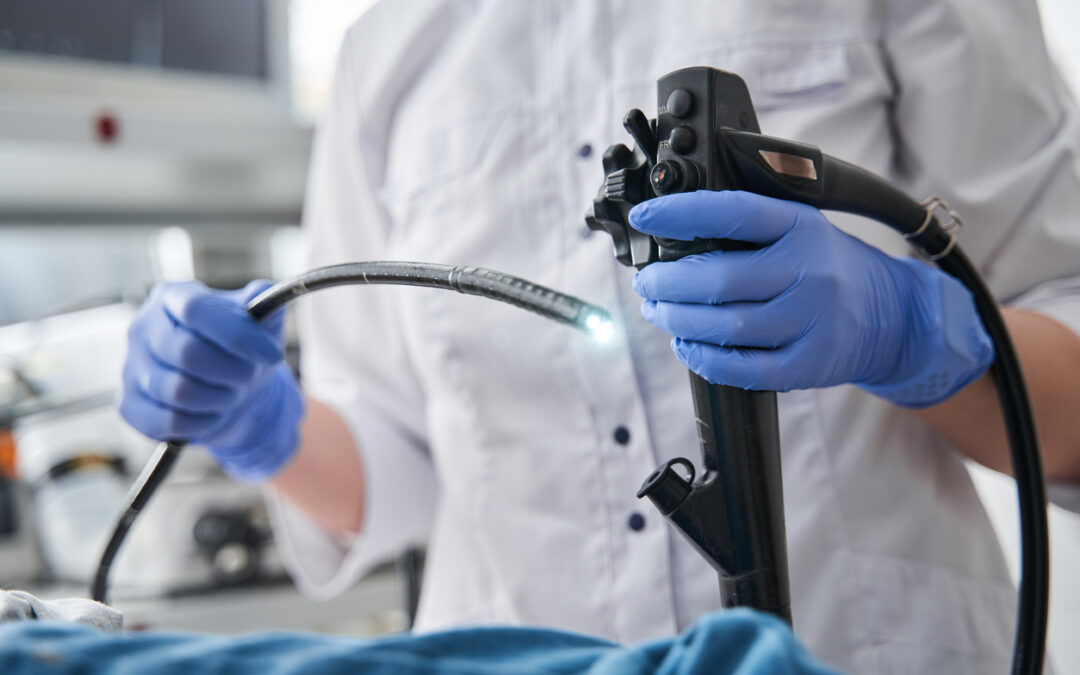
Endoscopes and duodenoscopes are long, flexible devices that have a light and a camera on the end. They are threaded down a patient’s throat to visualize parts of the digestive system. The scopes are used in ERCP (endoscopic retrograde cholangiopancreatography) procedures to examine the bile and pancreatic ducts.
Endoscope Lawsuits
Olympus, Pentax, and Fujifilm are the top 3 manufacturers that are named as defendants in ongoing litigation. These endoscope lawsuits are being filed as individual product liability cases in state and federal courts nationwide, rather than as a class action.
Olympus Pays $85 Million Fine for Failing to Report Scope Infections
Olympus has faced lawsuits over its endoscopes for more than a decade. Top executives at the company have also been linked to the scandal. For example, in 2018 Olympus pleaded guilty to failing to report infection-related adverse events tied to its TJF-Q180V scope. The U.S. Department of Justice (DOJ) ordered the company to pay $80 million in fines and $5 million in forfeitures.
Duodenoscopes Linked to Infection Outbreaks.
Unlike simple endoscopes, many Olympus duodenoscopes have a movable “elevator” mechanism at the tip of the scope to help guide the instrument into the bile or pancreatic ducts. This mechanism has small crevices and narrow channels that are hard to clean because they can trap bodily fluid, tissue, and microbes. This can transmit infectious biological material from one patient to the next, even if a hospital exactly follows the cleaning protocol specified by Olympus.
Lawsuits allege that the design of the elevator mechanism may result in biological material remaining on the endoscope after high-level disinfection. These lawsuits claim that the design flaw is in the mechanism itself, which is why lawsuits are being filed against Olympus rather than the hospitals that were following the cleaning instructions.
Types of Injuries Linked to Contaminated Medical Scopes
- Antibiotic-resistant “superbug” infections, including CRE (carbapenem-resistant Enterobacteriaceae)
- Sepsis
- Pseudomonas aeruginosa and E. coli infections
- Prolonged hospitalization and repeat surgery
- Wrongful death
Where Does the Litigation Stand Now?
This litigation follows years of scrutiny dating back to outbreaks at hospitals including UCLA’s Ronald Reagan Medical Center, Virginia Mason Medical Center, and Cedars-Sinai Medical Center. In these outbreaks, dozens of patients were exposed to antibiotic-resistant infections called CRE between 2013 and 2015.
What Should I Do?
If you or a family member underwent an ERCP procedure and later developed a serious infection, sepsis, or other complication, you may be entitled to pursue a claim against the scope manufacturer.
Keep any hospital records, culture results, and discharge paperwork related to your procedure and diagnosis. Even if you do not have these documents yet, a lawyer may be able to help.
UCLA Outbreak
The outbreak at UCLA was traced to the TJF-Q180V duodenoscope made by Olympus. Within weeks of the outbreak, lawsuits were filed by five victims and lawmakers demanded answers from Olympus and the FDA.
UCLA officials said the scopes remained dirty even after following Olympus’ cleaning instructions. In response, Olympus issued an urgent update to the instructions and the CDC issued an interim protocol for hospitals.
More Hospital Report Infection Outbreaks
- Virginia Mason Hospital: In May 2015, another seven “superbug” infections have been linked to a deadly outbreak at Virginia Mason Medical Center in Seattle, Washington, bringing the total number to 39 infections since 2010.
- Cedars-Sinai Medical Center: In March 2015, Cedars-Sinai Medical Center in Los Angeles confirmed that at least 67 patients were exposed and 4 developed antibiotic-resistant infections after undergoing medical procedures involving an Olympus duodenoscope.
- Allegheny General Hospital: In April 2015, a woman from Pennsylvania has filed a lawsuit after she was diagnosed with an antibiotic-resistant “superbug” infection transmitted on an Olympus duodenoscope during a procedure at Allegheny General Hospital in Pittsburgh.
- And more
Olympus TJF-Q180V Duodenoscope Recall
In January 2016, the Senate Health Committee released a report (PDF) finding that Olympus knew their duodenoscopes could transmit infections in 2012 but did not warn doctors or the FDA for another three years. In the meantime, at least 250 people were infected in 25 outbreaks.
On January 15, 2016, Olympus issued a recall for the TJF-Q180V duodenoscope to make design changes that should reduce the risk of infections. Changes include tightening the seal around the “closed” elevator mechanism channel to prevent patient fluids and tissues from leaking inside. The FDA also finally approved the scope — it has been on the market without approval since 2010.
FDA Updates Warnings and Cleaning Recommendations
Olympus and the FDA have been aware of the problem for years. Olympus warned hospitals in Europe about the risk of “superbug” outbreaks in January 2013. The FDA also received nearly 150 reports of endoscope infections since 2010.
In August 2015, the FDA recommended that hospitals take additional steps to clean the scopes, and ordered manufacturers to study how they are sterilized. The agency also issued warning letters to scope-makers for waiting years to report infection outbreaks.
The FDA has asked duodenoscope manufacturers to confirm that the cleaning instructions actually work. In January 2016, Fuji revised instructions for its most popular scope, the ED-530XT, which the FDA also said was on the market without approval.
Types of Endoscopic Procedures
An endoscope is a thin tube with a light and a camera on the tip. The scope is inserted into a patient’s body to help doctors diagnose medical conditions. Types of endoscopes include:
- Arthroscope (joints)
- Bronchoscope (lungs and airways)
- Colonoscope (colon and intestines)
- Cytoscope (bladder)
- Duodenoscope (upper intestines, pancreatic/bile ducts)
- Esophascope (esophagus)
- Laparoscope (abdominal organs)
- Laryngoscope (voice box)
- Proctoscope (rectum and colon)
- And more
Bronchoscope Infection Lawsuit Filed in Washington
The Seattle Times reports that the widow of a Navy veteran who died from antibiotic-resistant pneumonia has filed a lawsuit (PDF) blaming the VA hospital for failing to adequately sterilize bronchoscopes that were used to examine his lungs. The lawsuit was recently amended to blame the scope-washing machine made by Custom Ultrasonics. Click here to read more.
Do I have an Endoscope Infection Lawsuit?
The Schmidt Firm, PLLC is currently accepting endoscope infection and injury cases in all 50 states. If you or somebody you know suffered a severe complication of an endoscope or ERCP procedure, you should contact our lawyers immediately for a free case consultation. Please use the form below to contact our Defective Medical Device Litigation Group or call toll free 24 hours a day at (866) 920-0753.
Attention Lawyers: We consider a referral from another law firm to be one of the greatest compliments. If your firm is interested in referring us a case or for us to send you a list of previous award judgments and/or average referral fees, please visit the Lawyer Referral section of our website.
 The Schmidt Firm, PLLC has been recognized as one of the nation’s leading plaintiffs' law firms and handles cases in all 50 states. We are very proud of our legal achievements, but equally self-respecting of our firm's reputation for providing personal attention to each and every client we represent.